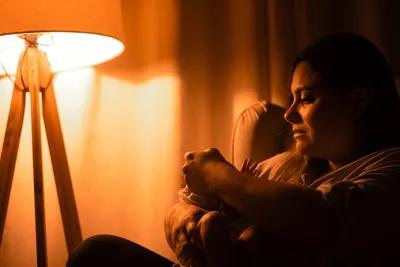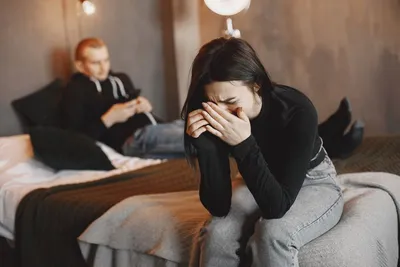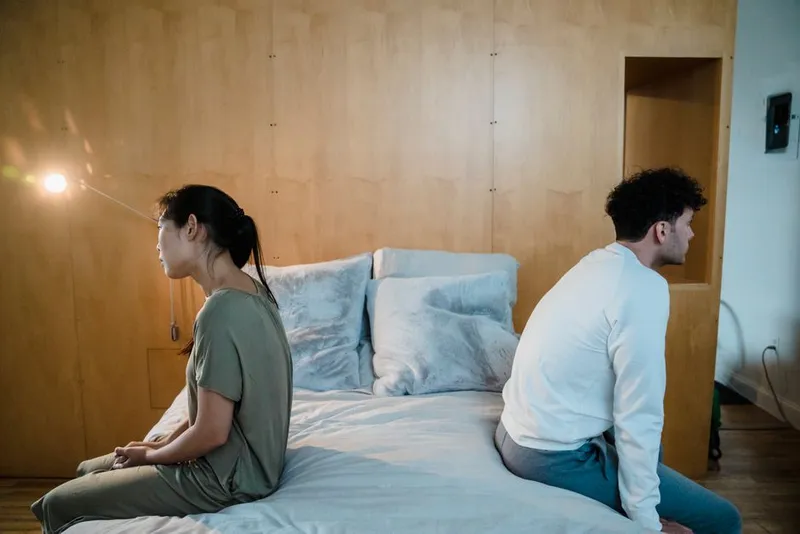
Being turned down by your partner can feel like being turned down as a person. That’s the core of it. Feeling sexually rejected is almost never just about the sex. It touches something older: the need to be wanted, to feel close, to matter to the person you chose.
If this has been happening repeatedly, you may have started to wonder whether it means something has fundamentally changed. In most cases, it doesn’t. But that doesn’t make it easier to sit with.
This post is for the person who’s tired of asking and quietly bracing for the answer.
Sexual rejection lands differently

There’s a reason it stings more than other kinds of disappointment. When you suggest dinner at a certain restaurant and your partner isn’t feeling it, you shrug it off. When you reach for them and they pull away, something else activates.
Asking someone to be close to you is also asking them to confirm that they want you. The rational mind knows what a no means. The emotional one registers something older and rawer.
This is normal. It’s also worth naming, because a lot of people carry guilt around how much it affects them, as if feeling hurt by rejection is an overreaction. It isn’t.
The distinction that helps most people isn’t whether the rejection is real or imagined. It’s the difference between what was actually said (“I’m not in the mood tonight”) and what was heard. Most of the damage happens in that translation.
What might be driving the refusals
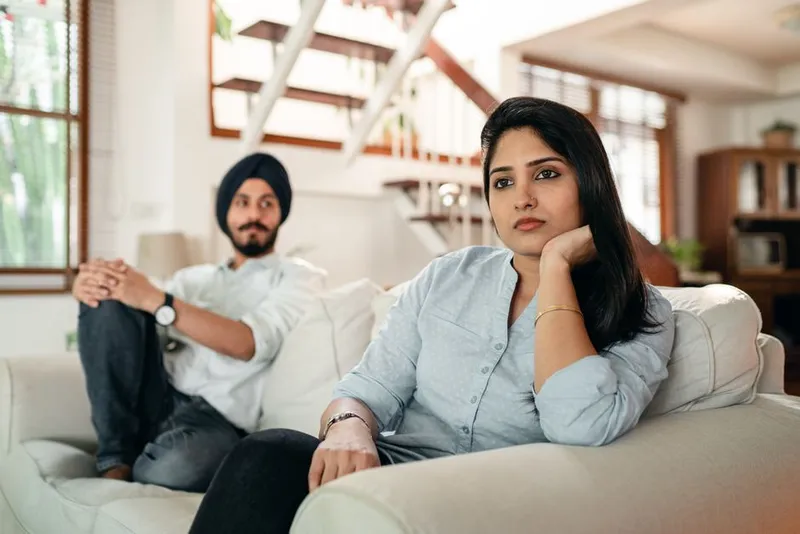
Sexual rejection rarely has a single cause. The most common ones have nothing to do with attraction.
Stress and tiredness. This is the most overlooked. When someone is running on empty, desire is often the first thing to drop. It’s not a choice. It’s physiology. Being tired isn’t the same as not wanting you. Almost nobody is taught to say that out loud, so the silence fills with the wrong interpretation.
Different desire styles. Research on spontaneous versus responsive desire is useful here. Some people need context and warmth before desire appears. They don’t start in the mood. They get there, if conditions are right. If their partner initiates before those conditions exist, the answer will often be no. Not because they don’t want closeness, but because the moment wasn’t right for them yet.
Unresolved emotional tension. For many people, emotional closeness and sexual desire are closely linked. If something has felt off between you: unspoken frustration, a disagreement that was technically resolved but not really. Desire can go quiet before either person has named what’s wrong.
Low desire as its own thing. Sometimes one partner simply has a lower baseline libido. This isn’t a character flaw, a verdict on the relationship, or something one person can fix for the other. It’s a real difference that usually benefits from honest conversation rather than patience alone.
The side of this nobody writes about

Almost everything written about feeling sexually rejected is written from the perspective of the person asking. The hurt of being turned down gets a great deal of attention.
The person saying no gets almost none.
That gap matters, because the person answering is often stuck too. If saying no regularly means an argument, a cold evening, or a partner who withdraws for days, they start dreading the question before it arrives. When both people are dreading the same moment, the distance grows without either person quite understanding why. One dreads the ask. The other dreads the answer.
It’s worth asking, quietly, whether the refusals might be shaped in part by what happens after them.
The silence does more damage than the no

Research, including a 2025 report in Psychology Today, puts the figure at around 80% of couples experiencing some version of desire mismatch at some point. Therapists treat it as baseline rather than exception.
What tends to determine outcomes isn’t the gap itself. It’s whether both people feel safe enough to name it.
When nobody names it, both people fill the silence with their own version of what’s happening. The person initiating hears rejection as withdrawal of desire, withdrawal of affection, possibly withdrawal of the relationship. The person refusing hears impatience, pressure, a partner who doesn’t understand them. Neither interpretation is necessarily right, but both feel true in the absence of any other information.
Talking about it doesn’t fix the underlying difference. But it makes the underlying difference survivable.
How to bring it up without making things worse

The timing and framing matter more than most people think.
Not during or immediately after a refusal. That’s when both people are in the least resourceful state, and anything said in that moment tends to come out either wounded or defensive.
Not in the bedroom. The physical space carries too much charge.
Find a calm, separate moment: a walk, morning coffee, a quiet evening when there’s no expectation of anything. Then say the specific thing, not the accumulated version of it. “I’ve been feeling a bit disconnected lately and I wanted to talk about it” lands differently than everything you’ve been carrying in silence for three months.
The goal of the first conversation isn’t to solve anything. It’s to make the next conversation easier.
For a structured way to explore what you each actually want before you have to articulate it face-to-face, a yes/no/maybe list gives both of you something concrete to compare. Each partner fills it out separately, in private, and only the overlapping results are visible. It doesn’t replace a conversation, but it often starts one in a way that a direct question can’t.
When rejection starts to feel like a pattern

A single no is a moment. A month of them is a pattern. A year of them with no conversation about it is something closer to a slow structural change in the relationship.
If you’re reading this because it’s been going on for a long time, a few things are worth sitting with.
Have you told your partner, clearly, that this is affecting you? Not as an accusation — as genuine information. Many people assume their partner already knows. Often they don’t, at least not the full weight of it.
Is there anything in the relationship, outside of the bedroom, that might be contributing? Stress, workload, something unspoken between you? If so, that’s often where the conversation needs to go first.
And if you’ve tried to have the conversation and it hasn’t moved anywhere, that’s a signal in itself. Some conversations need a third person to be possible.
For more on what happens when this dynamic persists, the post on dead bedroom covers the longer-term pattern and how couples begin to address it. The sexless marriage post covers the same ground from a different angle, focused on what changes when the pattern has been in place for months or years.
When the conversation is open again and you want a low-pressure way to signal interest on a given evening, how to initiate sex without either person having to ask directly walks through what that looks like.
When professional support is the right next step

There’s no fixed threshold. But a few situations call for professional support rather than self-guided work.
When one person refuses to discuss it at all. When the refusals are accompanied by contempt, punishment, or control. When you’ve tried to talk about it and the conversation consistently collapses. When the pattern has continued long enough that both people have started to protect themselves against it.
A sex therapist or couples counsellor doesn’t tell you what to do. They give both of you a space to say the things that haven’t been said yet, and to hear them without either person having to immediately defend themselves.
In the UK, COSRT (the College of Sexual and Relationship Therapists) maintains a directory of accredited sex therapists. In the US, AASECT has a searchable referral directory. The Gottman Institute offers an international therapist finder for couples.
If the dynamic has moved into controlling or coercive territory, speaking to a therapist individually rather than as a couple is usually the right first step.
Frequently asked questions
What does it mean if my husband rejects me emotionally and sexually?
It usually means something is going on for him rather than something being wrong with you. The most common causes are stress, low desire, unspoken tension in the relationship, or a difference in desire styles. Emotional and sexual withdrawal often arrive together because, for many people, the two are closely linked. It’s worth naming what you’re experiencing and finding a calm moment to say so directly. If the pattern continues without any conversation, that’s the part that needs attention.
Why does my partner keep rejecting me sexually?
The most common causes are stress, tiredness, different desire styles, or unresolved emotional tension between you. It’s rarely about attraction. A partner who’s exhausted after a long week isn’t sending a message about how they feel about you — they’re sending a message about their current state. The difficulty is that when nobody says that out loud, the person initiating tends to hear it as something more personal.
Is ongoing sexual rejection a form of emotional abuse?
Rejection isn’t inherently abusive. A partner who doesn’t want sex at a given moment has every right to say so. The situation changes if refusals are used deliberately as punishment, are accompanied by contempt, or form part of a broader pattern of control. If that describes what’s happening, speaking to a therapist individually rather than as a couple is usually the right first step.
How do I stop taking sexual rejection personally?
Understanding the mechanics helps. A no is almost always about the person saying it: their tiredness, stress, desire state, or something unresolved between you. Over time, open conversation does more than reframing alone. When both people can say what’s actually happening for them, the silence that feeds the personal interpretation starts to close.
Can a relationship recover from a pattern of sexual rejection?
Yes. Desire discrepancy is one of the most common patterns in long-term relationships, and many couples find a way through it. What tends to matter most is whether both people feel safe naming it. The couples who do worse are usually the ones who say nothing until the silence has done too much damage.
Is it normal for one partner to want sex more often than the other?
It’s very common. Research puts the figure at around 80% of couples experiencing some version of it at some point. The difference in drive doesn’t predict whether the relationship will be satisfying — the conversation about it does.
At what point should we see a therapist about sexual rejection?
When the conversation hasn’t moved after you’ve tried to have it, when one person won’t engage with the topic at all, or when the pattern has continued long enough that both people are protecting themselves against it. A sex therapist or couples counsellor can hold the conversation when the two of you can’t hold it alone.